

The Tar Route from Kainuu to Oulu – Exhibition
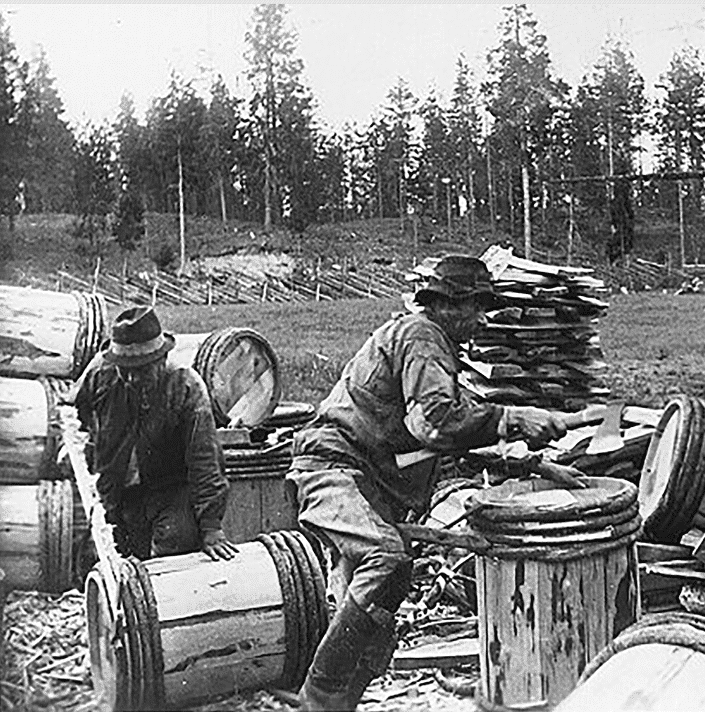
1. MAKING TAR BARRELS
The tar barrels were containers of a specific model and size (125 liters, the so-called Rostock measurement), which had to precisely meet the requirements set for the size and strength. The barrels were made by making strips out of pine boards. There were typically 13 barrel strips and 3 barrel strips on the end of the barrel. One man could make 3 barrels in one day. Completed barrels were inspected and stamped with a special marking iron. The stamper (ruunaaja) could be performed by municipality’s police chief.
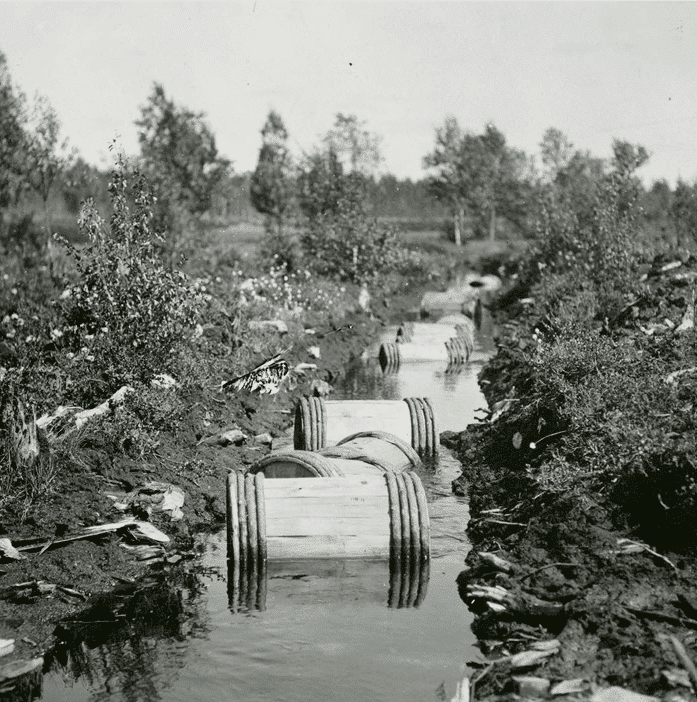
2. SOAKING BARRELS
After completion, the barrels were soaked before use in swamps or water ditches.
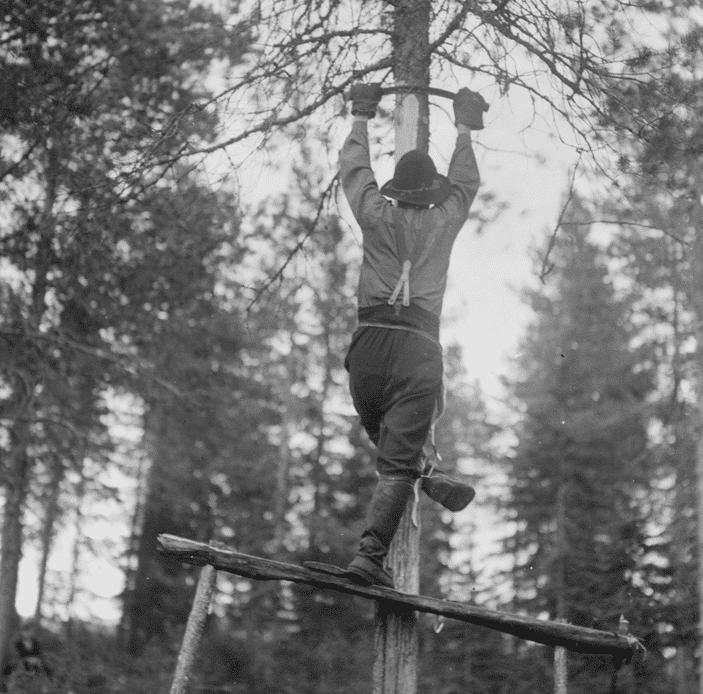
3. CARVING
The production of tar begins with the peeling of a medium-sized pine trunk. The bark was carved off, with a carving iron, as high as could be reached. On the northern side of the tree, a palm-wide piece of bark was left to keep the tree alive. The tree was left to create resin for three years. The trees were also left to grow in size for another two years. After five years the trees were felled, taken to the tar pit and chopped into splinter.
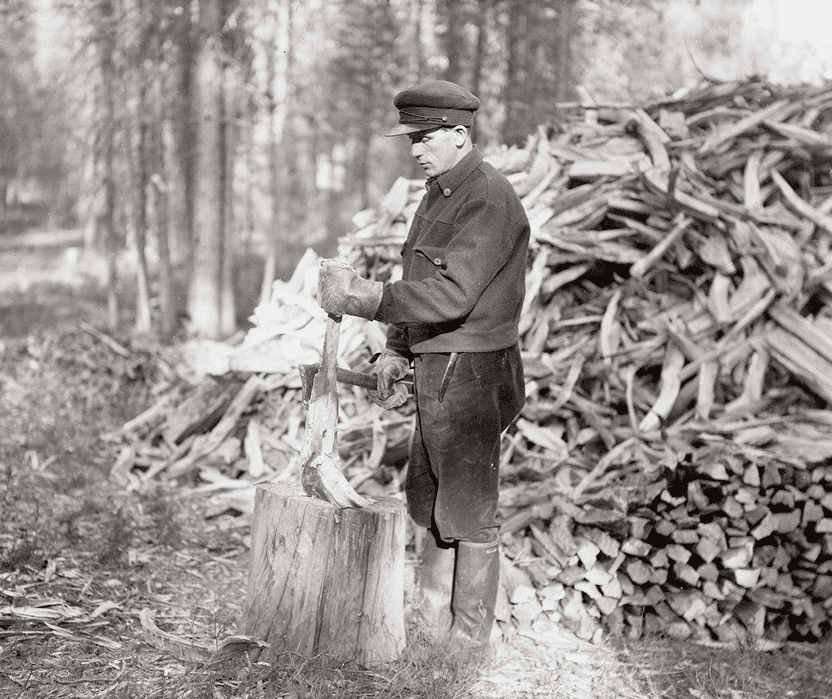
4. RESINOUS WOOD
Resinous stumps and dried trees, which were chopped into thin splinters, were also used as tar. The most common method was still carving.
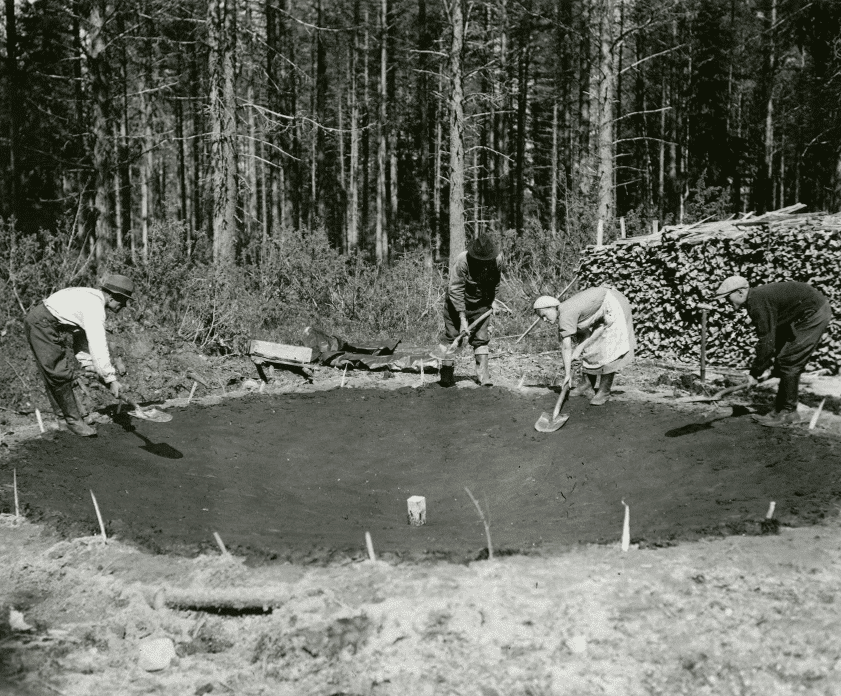
5. THE BOTTOM OF THE TAR PIT
The tar pit was a funnel-like shaped pit, round on the top, dug into the ground. The bottom was leveled with clay and “tervankusi” (water mixed with tar residue) to make it tar-proof. The most important part of choosing the location of the tar pit was the location of the tar forest. A place of water near the pit was essential in case of a fire and the soaking of the barrels. If the place of water was in a swamp, it also provided peat for the covering of the tar pit. A medium-sized 50-barrel pit had a diameter of about 12 meters.
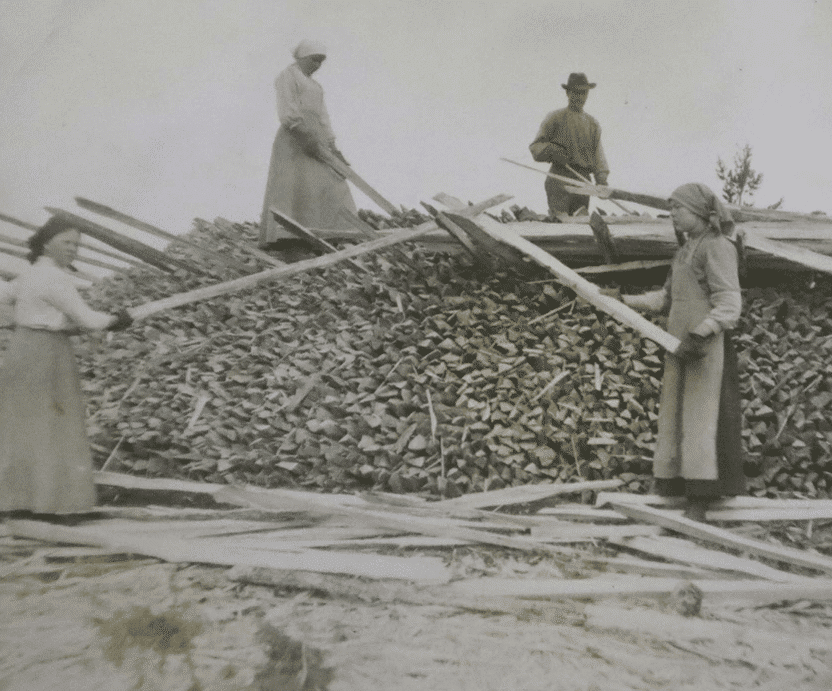
6. LAYING OUT THE TAR PIT
Laying out a medium-sized tar pit took 3-4 days. In this work, the whole household (able to work) was involved, this included the maids and children.
The laying out began with the edges. The splinters were directed towards a specific point in front of the pit, with the thicker head on the side of the edges. The wood was wedged in a way that resulted in the top splinters being strongly tilted to the center and which gave way to a hemispherical structure. The tar pit was covered in moss, soil and peat.
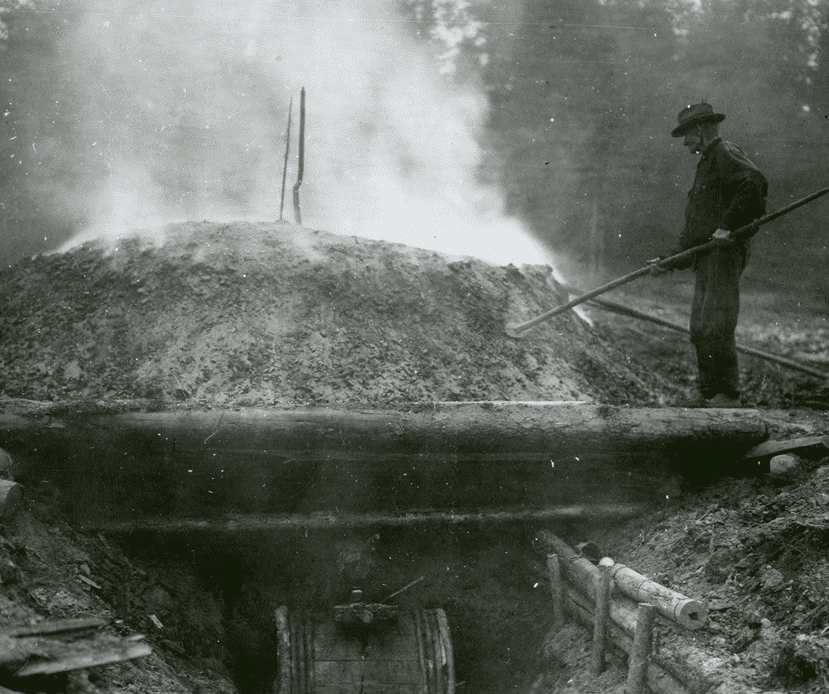
7. LIGHTING THE PIT AND THE PIT MASTER
The pit was lit on a calm, rainless day around Midsummer. The splinters were lit from the exposed parts at the bottom. When the fire got off to a good start, the ignited edge was blocked with moss and the pit was covered with soil. The pit master, known as the lotnikka, supervised the burning pit, and made air holes in suitable places or closed them, and made sure that the burning progressed evenly.
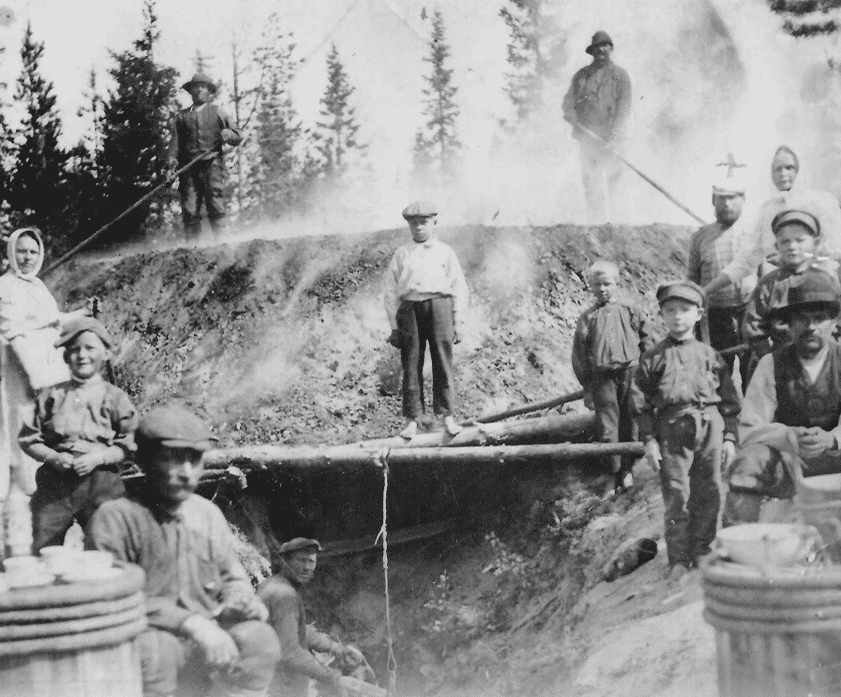
8. COFFEE WITH THE FOLK
According to an old tradition, the pit master (lotnikka) was offered a glass of alcohol after the pit was lit. The rest of the folk had to settle for coffee and bread cheese.
9. THE DRIPPING OF THE TAR
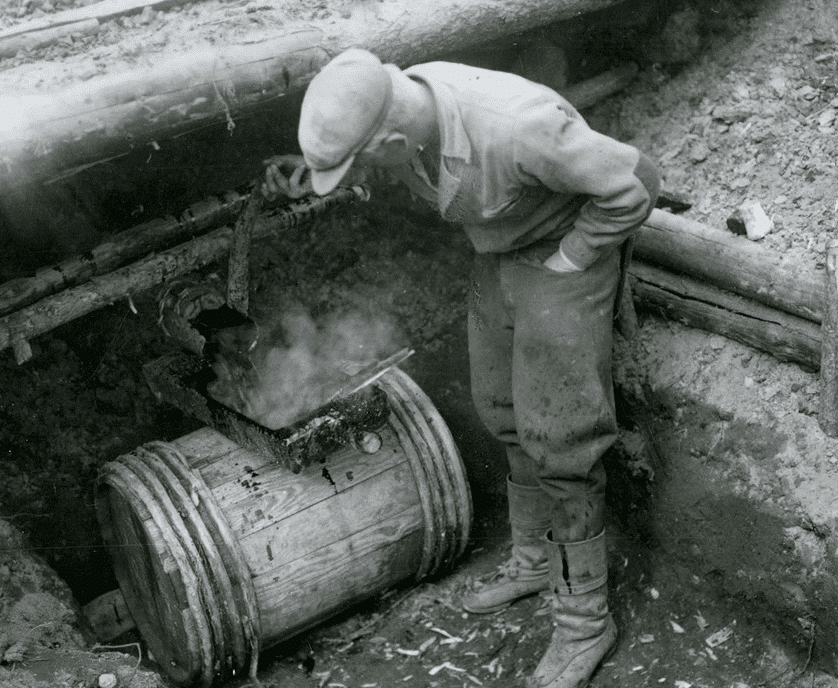
The tar pit was burned for 2-3 days before the first drops of tar were obtained, and the first barrels of them were just water with tar residue. The tar flowed to the bottom of the pit, from where it was led along a wooden pipe to the tar chute and from there into the tar barrel.
10. TRANSPORTING THE BARRELS
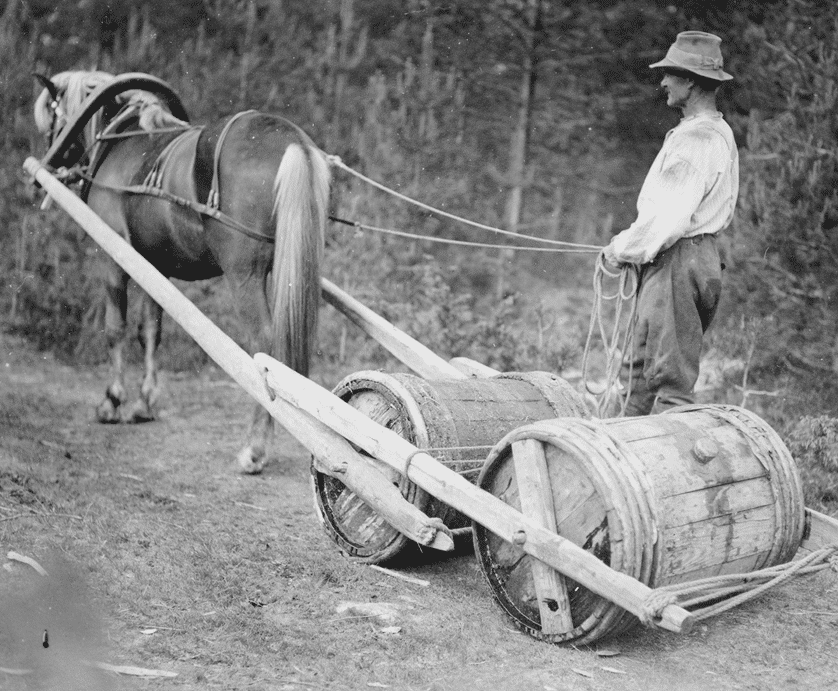
The barrels had to withstand the transport from the tar pit to the boat on horse-drawn beams, where two barrels served as the cart and therefore the rims had to be of strong material and build.
11. SEPARATING THE WATER FROM THE TAR
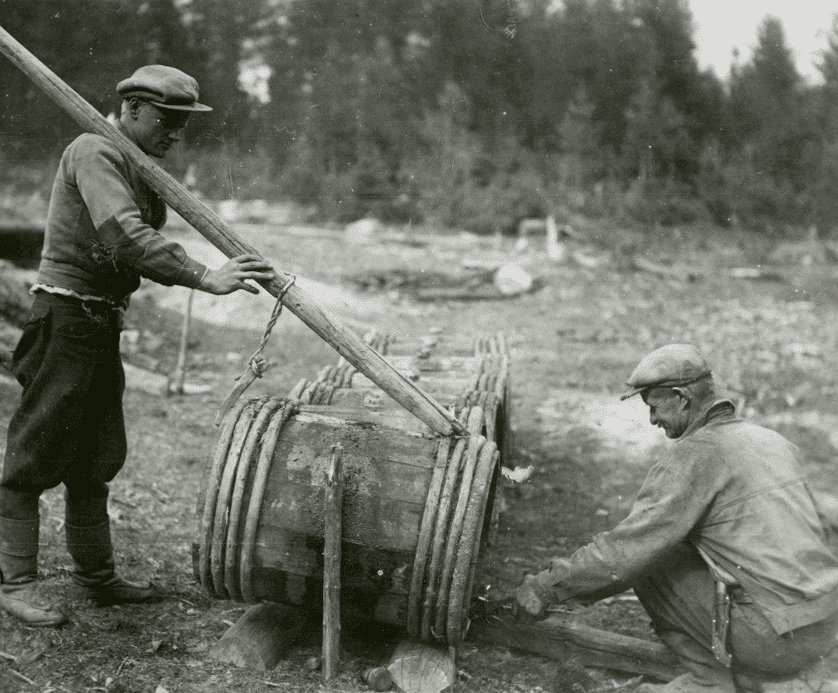
Good tar from the pit was separated well from the water before distribution. The tar was left out to sit, after which the excess water was separated from the tar.
12. LOADING OF THE TAR BOATS
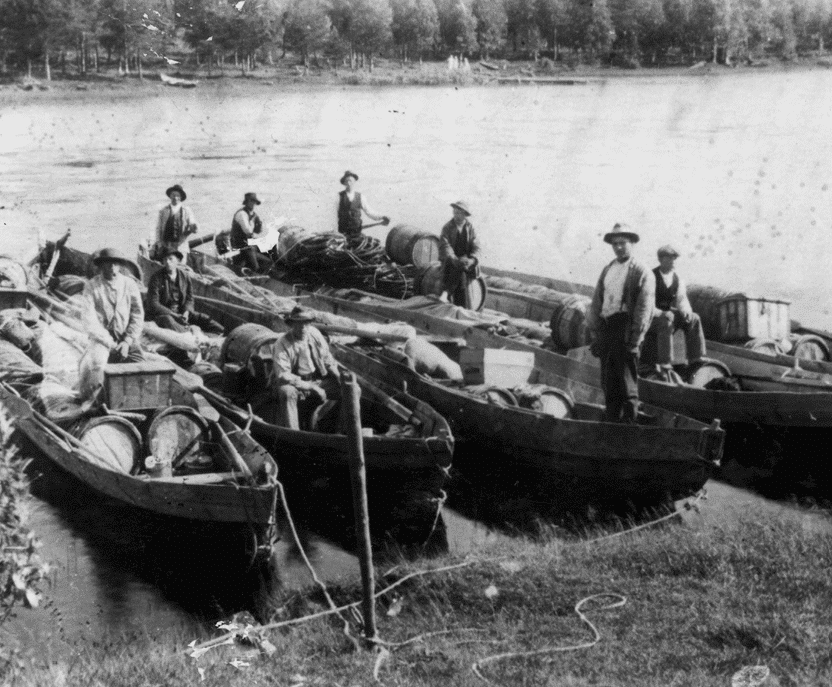
After the tar barrels had been pulled on beams or led along the river to open water, they were loaded onto tar boats. The tar boats on the Oulujoki were specifically called the “paltamo” because the Paltamo region was the first to transport tar via boats from Kainuu to Oulu. The boat was about 13 meters long and 1.2 meters wide. About 25 barrels fit on the boat. The boat had 2 rowers. The end of the boat was typically captained by the man of the house who was the seller of the tar.
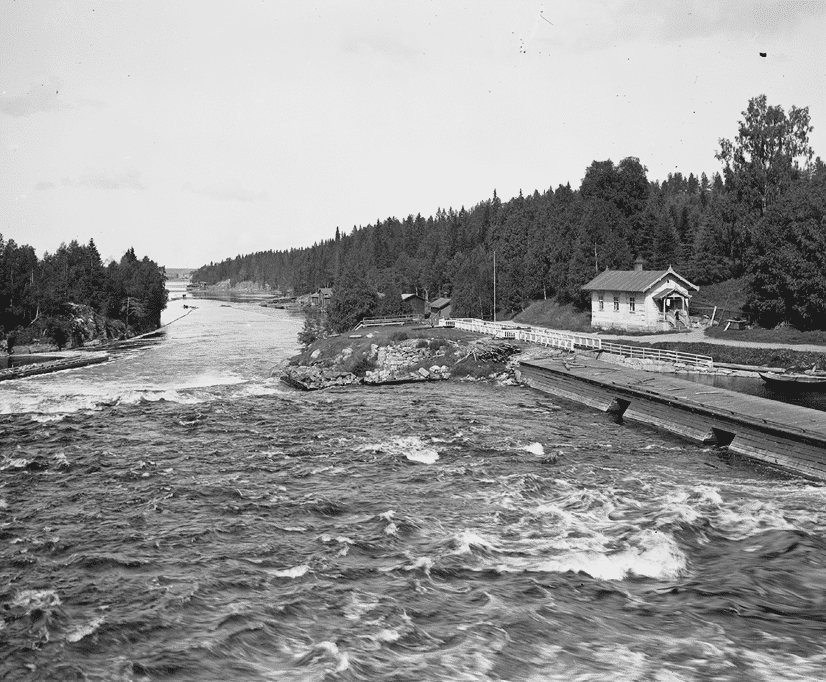
13. ÄMMÄKOSKI
The rapids of Ämmäkoski and Koivukoski in Kajaani were so treacherous, that they were no used by the tar boats. To circumvent them, sluice gates were built in the 1840s. This was also somewhat of a state directed aid to the industry.
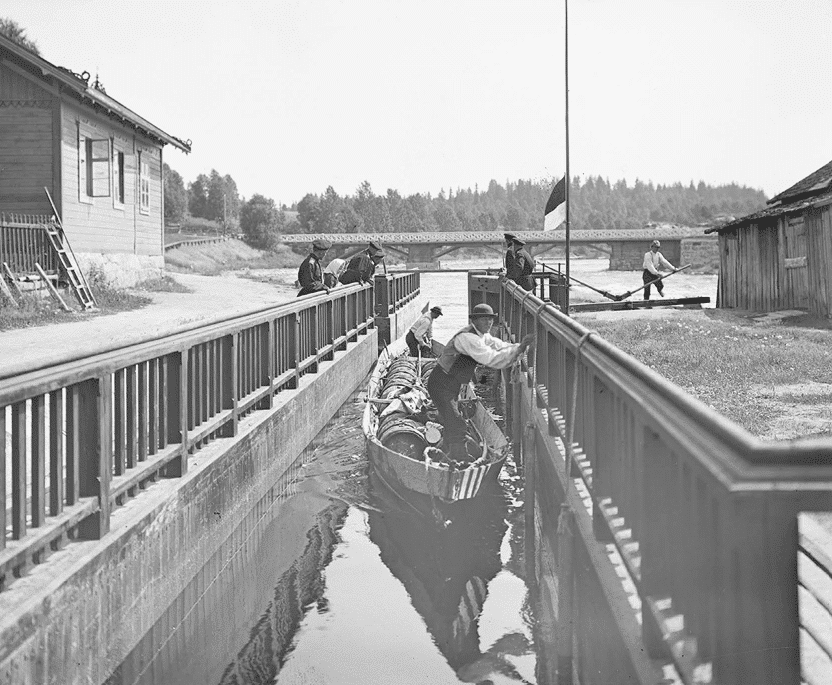
14. THE BOAT IN A SLUICE GATE
A tar boat in a Ämmäkoski sluice gate in Kajaani.
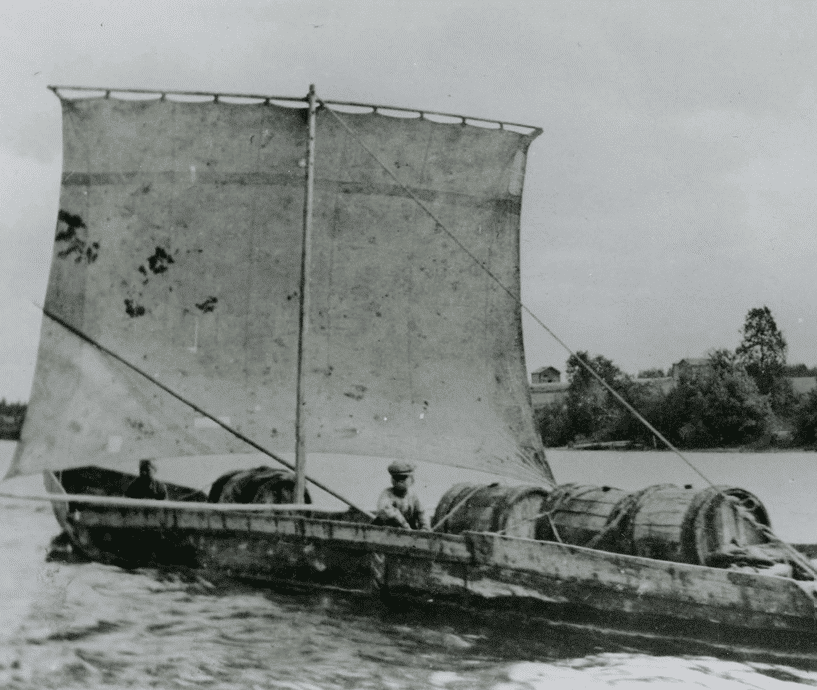
15. SAILS TO HELP
On the open waters and backwaters, a down wind sail was used. A tar boat with sails was called a ”tar goose”. The round trip from Kainuu to Oulu took about 2-3 weeks.
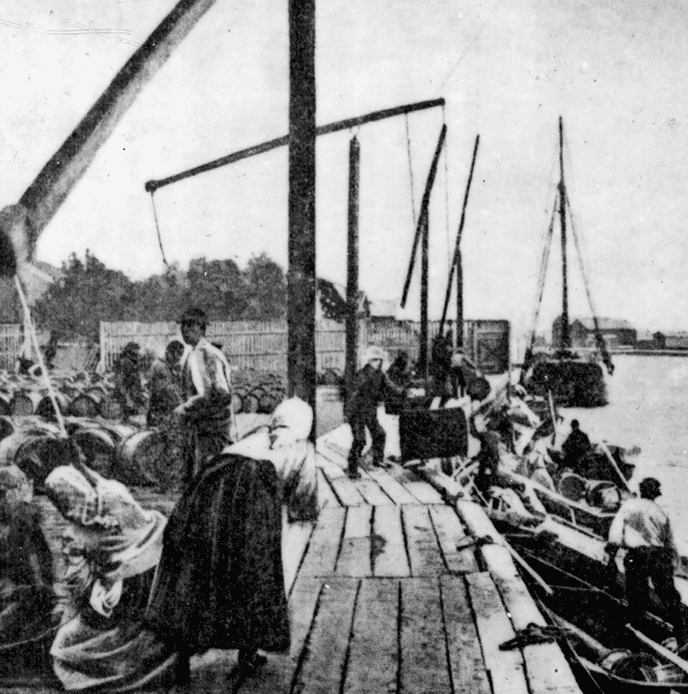
16. THE LIFTING OF THE BARRELS
The tar barrels were lifted from boats onto the quay at Oulu’s Tervahovi’s pier.
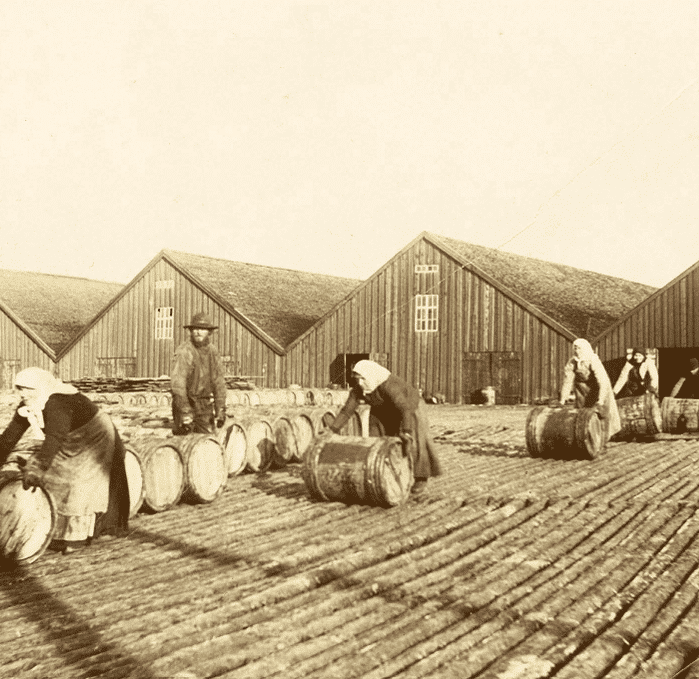
17. OULU’S TERVAHOVI
The Tervahovi was a tar storage and loading place located on the northern shore of Toppilansalmi in Oulu. The Tervahovi operated from 1783 until the Tervahovi fire in 1901.
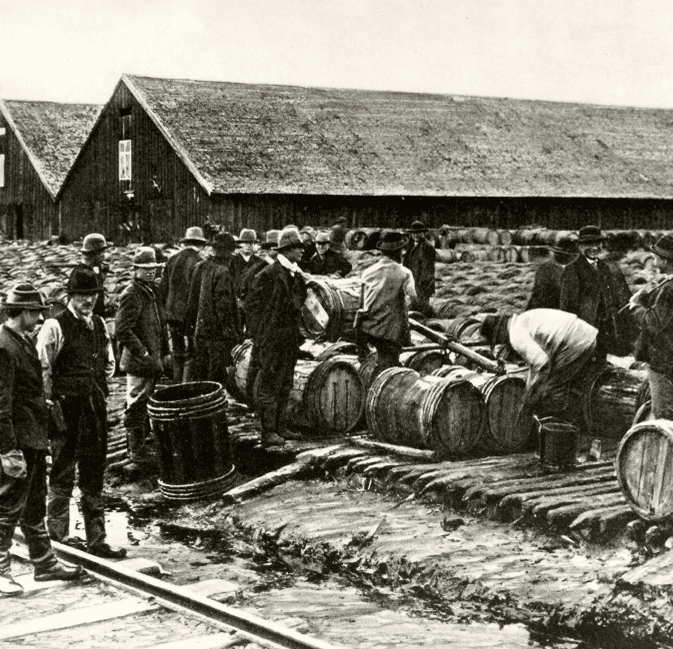
18. INSPECTING THE TAR
The tar barrel inspector, known as the räkkäri, working on Toppila’s pier in Oulu. The inspector inspected the quality of the tar and stamped the barrels. In this way, the barrels were put in such a condition that the foreign buyers would not be deceived. The räkkäri inspectors were generally people who had a lot of public trust.
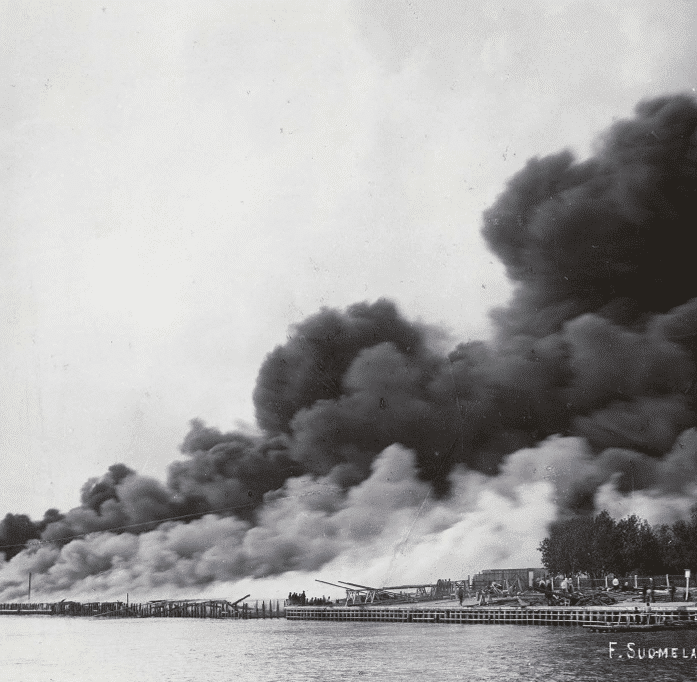
19. THE TERVAHOVI FIRE
The Tervahovi in Oulu burned on 10.06.1901. The fire began in the neighboring sawmill. The fire consisted of 13 200 barrels of tar.